Design & Delivery / GUIDE 20
Interior Design Shenzhen: Practical Biophilic Interiors
Plan biophilic interiors in Shenzhen with considered planting, natural materials, daylight and a realistic maintenance strategy.
The essential idea
A practical biophilic interior connects people with natural elements through views, light, materials and planting. Choose elements that suit the site and can be maintained, rather than treating greenery as a last-minute decoration.
Plants can give an interior texture and a sense of life, but a successful natural palette is more than a row of pots. Views, changing daylight, material character and the places people pause can all contribute. For an Interior Design Shenzhen project, the useful question is how those elements fit the room's actual conditions and operation. The design should remain convincing after the opening photographs are taken.
Begin with what the site already offers
Look for existing views, daylight and connections to outdoor space. A well-positioned seat may make a garden or distant landscape more useful without adding an elaborate installation. Where views are limited, consider how natural materials and carefully placed planting can contribute to the experience.
Do not assume every natural reference has the same effect. A decorative leaf pattern, a living plant and a view of a tree offer different qualities. Choose elements because they support the intended atmosphere and activity, and describe that intention clearly in the brief.
Match planting to real conditions
Ask a qualified planting supplier or horticultural specialist to assess light, temperature, airflow and maintenance access. A plant selected only from an image may not suit the location. Review the conditions at the actual position, including the effect of blinds and nearby air outlets.
Discuss seasonal variation and replacement expectations. The appearance of living planting changes, and the operator needs to understand what normal care involves. Record who will water, prune, inspect and replace plants. A maintenance plan is part of the design, not an optional addition.
Place planters as part of the layout
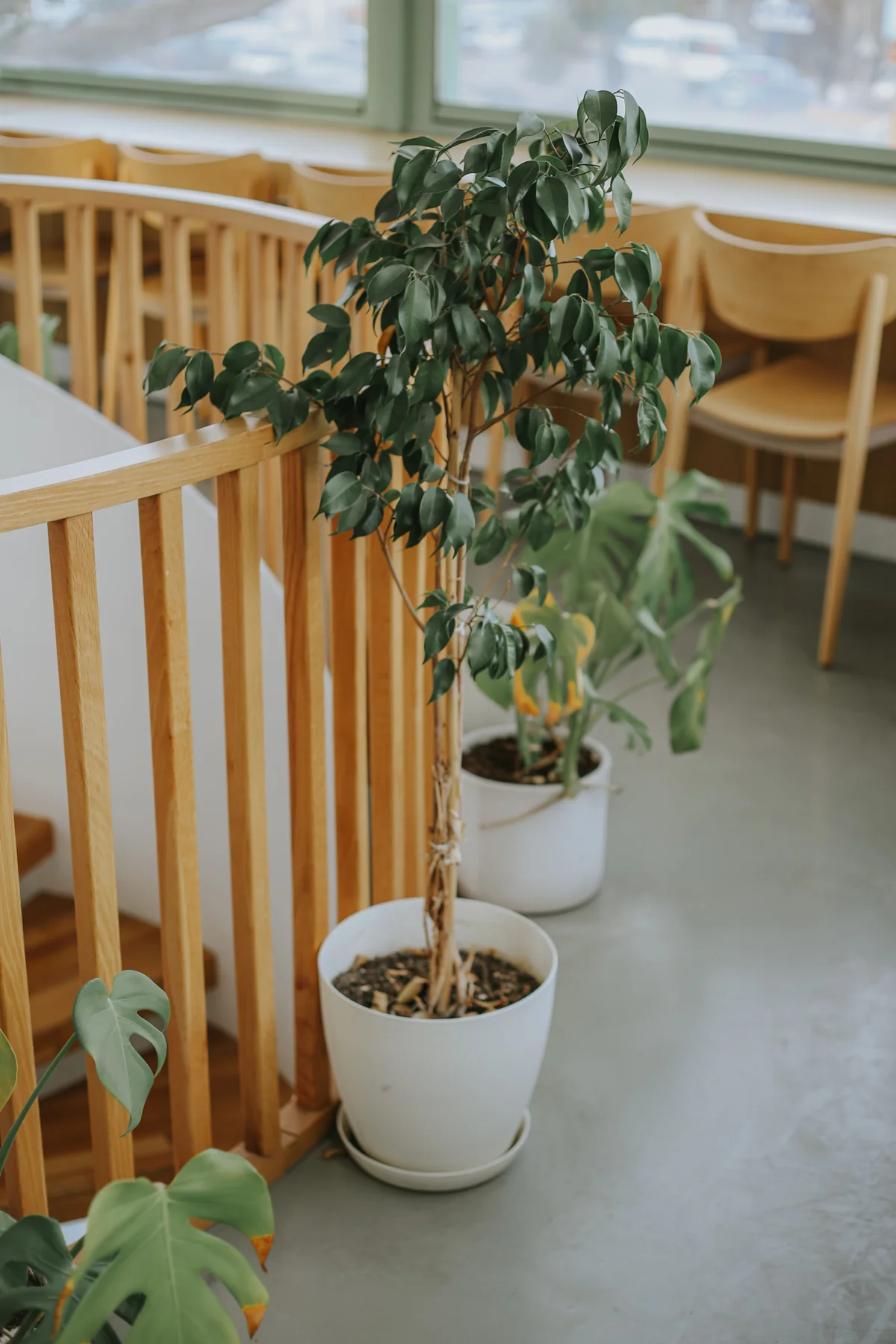
Use planting to frame a view, soften a threshold or distinguish a seating area where appropriate. Keep circulation, doors, sightlines and required access clear. The planter's full size matters, including foliage and the space needed for care.
Consider stability, water handling and the relationship with surrounding finishes. Large planters may require specialist review of loading and installation. Protect nearby surfaces through an appropriate detail rather than relying on staff to avoid every spill. The maintenance team should be able to reach the planting without disrupting normal use.
Use natural materials with a clear purpose
Timber, stone, woven surfaces and textured fabrics can create a coherent palette, but suitability still depends on application. Review durability, cleaning and sourcing documentation as you would for any other material. A natural appearance does not automatically establish environmental performance.
Vary texture with restraint. Too many competing materials can make a space visually busy. Consider how touch, pattern and light work together in the areas people use most. A small number of well-chosen details can communicate the concept more clearly than repeated decorative gestures.
Avoid unsupported performance claims
Do not present indoor plants as a substitute for a properly designed ventilation or air-quality strategy. Likewise, avoid promising health or productivity outcomes from a decorative scheme alone. If the project has measurable environmental or wellbeing goals, define them with the relevant specialists and evidence.
A clear, modest design intention is often more useful: improve the view from a waiting seat, create a gentler transition or bring visual variety to a shared space. These aims can be discussed and reviewed without attaching unsupported numerical benefits.
Check the long-term arrangement
- Confirm that the proposed planting suits its location.
- Agree maintenance responsibility and access.
- Coordinate water handling and nearby materials.
- Keep routes, signs and essential equipment visible.
- Review the cost and process of replacement.
- Revisit the installation after a period of normal use.
The most convincing biophilic interior is one that still feels cared for months later. In Shenzhen offices, hospitality spaces and commercial settings, that depends on matching the concept to everyday operation. Natural elements should enrich the room while remaining practical for the people responsible for it.
Common questions
Is a living wall better than individual planters?
Neither is universally better. Compare the visual role, available conditions, irrigation, access and maintenance resources before choosing an approach.
Can artificial planting be part of the concept?
It can provide a visual reference where living plants are unsuitable, but it should be described accurately and maintained. Do not attribute the properties of living planting to an artificial product.